

Train Ambulance Service From Delhi to Nagpur
Published on: August 30, 2025
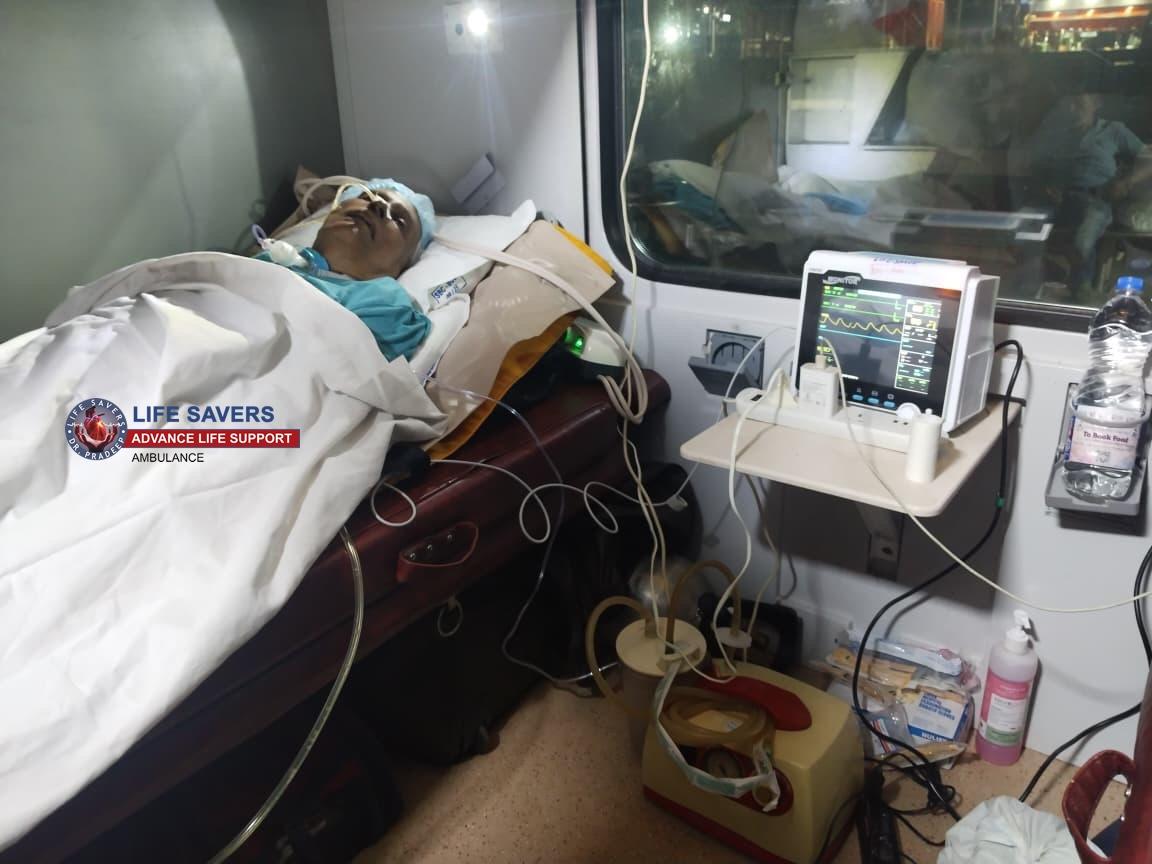
Gurgaon – Nagpur | ICU Train Ambulance Transfer for a Critically Ill Neurological Patient
Case Overview
Long-distance transfers of critically ill patients require uninterrupted medical supervision, careful coordination, and hospital-grade life support during transit. In this case, a 75-year-old female patient was safely transferred from Medanta Hospital, Gurgaon, to Kingsway Hospital, Nagpur, using a fully equipped ICU train ambulance, ensuring continuity of care throughout the journey.
Patient Background and Medical History
Mrs. Nirmala Chaukse, aged 75 years, was admitted to Medanta Hospital, Gurgaon, on 19 August 2025 in an unconscious state. She was diagnosed with hydrocephalus, viral fever, and pneumonia. The patient had a complex neurological history, including surgery for a brain tumour at Medanta Hospital in August 2021.
More recently, on 23 July 2025, she underwent a ventriculoperitoneal (VP) shunt procedure for hydrocephalus at Kingsway Hospital, Nagpur. Following discharge on 28 July, her condition deteriorated, leading to re-admission at Kingsway Hospital on 9 August 2025 with symptoms of unconsciousness, seizures, high-grade fever, pneumonia, breathlessness, and bronchospasm.
Decision for Intercity Transfer
After initial stabilisation in the ICU at Kingsway Hospital, the treating team determined that the patient required advanced neurological intervention and decided to shift her to Medanta Hospital, Gurgaon. Given her unstable condition, the need for continuous monitoring, and long travel distance, a medically configured train ambulance was selected as the most appropriate mode of transport.
ICU Train Ambulance Transfer to Gurgaon
On 18 August 2025, the patient was transferred using an AC First Class train coach configured as a mobile ICU. The onboard medical team ensured continuous monitoring of vital parameters, oxygen therapy, airway management, and ventilatory support throughout the journey. The transfer was completed without clinical compromise, and the patient was admitted directly to the ICU upon arrival at Medanta Hospital.
Treatment at Medanta Hospital
At Medanta, the patient underwent an emergency repeat VP shunt procedure for hydrocephalus on 26 August 2025. Post-operatively, she remained in the ICU on mechanical ventilation with tracheostomy support. Following gradual stabilisation, she was shifted to the ward on intermittent BiPAP and supplemental oxygen.
Planning the Return Transfer to Nagpur
Although there was partial improvement, the patient continued to require specialised long-term neurological and respiratory care. After multidisciplinary evaluation, it was decided that further management closer to home at Kingsway Hospital, Nagpur, would be appropriate.
Life Savers Ambulance Service once again arranged a medically supervised ICU train ambulance transfer, this time using the Secunderabad Rajdhani Express in AC First Class. The setup included continuous oxygen support, advanced monitoring, and life-support equipment, with trained medical professionals accompanying the patient throughout the return journey.
Transfer Execution and Monitoring
During the Gurgaon-to-Nagpur transfer, the patient remained under constant medical observation. Vital signs were monitored regularly, oxygenation was maintained, and airway care was managed continuously to prevent deterioration during transit. The coordinated planning ensured a smooth and safe transfer despite the patient’s critical condition.
Clinical Perspective
This case highlights the role of ICU train ambulance services in managing long-distance transfers of neurologically compromised patients. For routes such as Gurgaon to Nagpur, rail-based critical care transport offers a stable environment, extended monitoring capability, and continuity of hospital-level care when air transfer is not clinically or logistically optimal.
Summary
Intercity transfers involving critically ill neurological patients demand precise coordination, experienced medical escort, and uninterrupted life support. In this case, structured planning and ICU-grade train ambulance services enabled safe transfers in both directions, ensuring continuity of care across multiple stages of treatment.